 Shrimad Astro

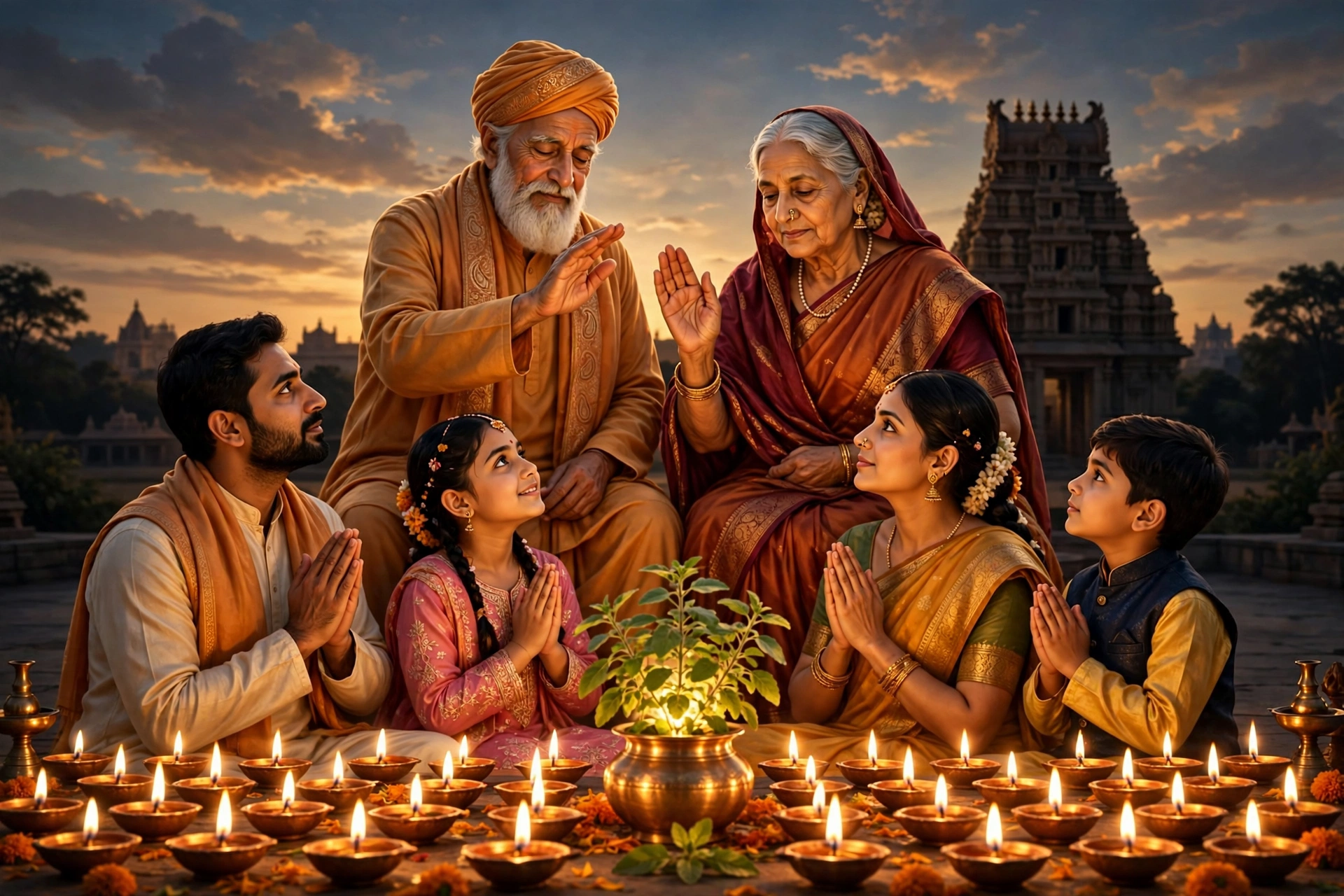
What Pitra Dosh actually is
Let’s start with the simplest version. In Vedic astrology, the 9th house of your kundli belongs to your father, your gurus, and your ancestors — the whole line of people whose shoulders you’re standing on. The Sun represents the father and the paternal line. When the Sun is afflicted by Rahu or Ketu — especially with Rahu in the 9th house, or the Sun trapped between malefics — tradition calls it Pitra Dosh: an ancestral imbalance sitting in the chart like a loose wire.
The idea is this: ancestors whose rites were skipped, whose deaths were sudden or untimely, or whose unfulfilled wishes still hang in the family line, leave behind an unresolved energy. It’s not a “curse” in the horror-movie sense — every source that describes it frames it as unfinished business. The free kundli can show you whether your Sun and 9th house are under this kind of strain, but a full reading always needs a real astrologer’s eye.
The signs people actually notice
Here’s the honest part: none of these signs prove Pitra Dosh. A delayed marriage can have many causes, and money trouble usually has a more boring explanation. Traditional astrology treats these patterns as clues worth checking together, not as verdicts:
- Marriage keeps slipping away. Alliances fixed and then broken at the last moment, or years of proposals that go nowhere despite everything looking fine on paper.
- Money that won’t stay. Income comes, then something or the other drains it — sudden losses, debts that refuse to shrink, business efforts that stall for no clear reason.
- Trouble around children. Difficulty conceiving, miscarriages, or children with recurring health problems. Tradition links the 5th house (children) and the 9th house (ancestors) in this one.
- The house never feels peaceful. Constant small quarrels between family members, elders and youngsters talking past each other, a heaviness that visitors can feel.
- Career that stalls despite hard work. Promotions that always go to someone else, jobs that end just when they start looking stable.
- Dreams of ancestors. This one is the classic. Elders appearing in dreams asking for food or water is taken across traditions as a direct message — the ancestors asking to be remembered.
One or two of these in a rough year? That’s just life. But families often describe a strange feeling that everything is slightly harder than it should be, and that the harder thing has been true for years. That’s when people start saying the words “pitra dosh.”
What tradition says causes it
The causes listed in traditional texts and by practising astrologers are refreshingly concrete. The most common one is simple neglect: shraddha and tarpan not performed — not out of malice, just out of modern life. The family moved to a city, the panditji’s number was lost, nobody remembered the tithi. Then there’s the harder case: an ancestor who died an unnatural or untimely death, without proper rites. The Garuda Purana (40:4-12) describes exactly this situation and prescribes a special rite called Narayan Bali, traditionally performed at Trimbakeshwar, Haridwar, Badrinath or Gaya.
Other causes the tradition names: unfinished ancestral wishes, disputes over inherited property that were never resolved, and family members who disrespected their elders. The point is always the same — a break in the line of remembrance. And the tradition is equally clear that the fix runs through the same channel: remembrance, done properly.
Remedies simple enough to actually do
You don’t need a week in Kashi to begin. The tradition has a ladder of remedies, starting from things anyone can do this month:
- Amavasya tarpan. Every new-moon day, offer water to your ancestors. Face south, mix black sesame into the water, and simply remember them by name. Check the exact amavasya dates and the shraddha tithi for your family’s specific day — doing it on the right tithi matters in tradition.
- The peepal tree on Saturdays. The peepal is traditionally considered the dwelling place of the pitris. Offer water to a peepal tree every Saturday morning and light a diya under it in the evening.
- Feed in their name. Feed crows (tradition’s messengers of ancestors), cows, and dogs. Donate food, clothes or grain in your ancestors’ names — many families do this every month, not just in Pitru Paksha.
- Mantras. The Mahamrityunjaya mantra (find the correct text in our mantra collection) and the Pitru Gayatri are the most commonly prescribed. The Sanatan Shastra library also holds the Navagraha Suktam and Pitru-related Vedic texts for deeper reading.
- The big guns, when needed. Pind daan at Gaya is considered the most powerful single act for ancestral peace — tradition says it satisfies many generations. For severe cases involving unnatural deaths, a special Narayan Bali rite at Trimbakeshwar, Gaya or Rameswaram is prescribed by pandits.
And here’s the remedy nobody writes on the posters: take care of your living parents and grandparents. The tradition is explicit — ancestors are pleased when the elders still with you are respected. That one costs nothing.
FAQs
Can Pitra Dosh be removed permanently?
Tradition says the dosh itself is ancestral karma and can’t be erased like a file, but its effects can be greatly reduced — some families report years of calm after proper shraddha and one pind daan at Gaya. Regular small remembrance beats one grand ritual done with reluctance.
Is Pitra Dosh the same as Kaal Sarp Dosh?
No, though people confuse them because Rahu and Ketu appear in both. Kaal Sarp is about all seven planets caught between the nodes; Pitra Dosh is specifically about affliction in the 9th house or to the Sun — the ancestral axis.
What if I don’t know my ancestors’ tithis?
Then every amavasya, or the Pitru Paksha fortnight as a whole, is your window. Tradition is practical about this: remembering them on the right day is better, but remembering them at all is what counts.