 Shrimad Astro

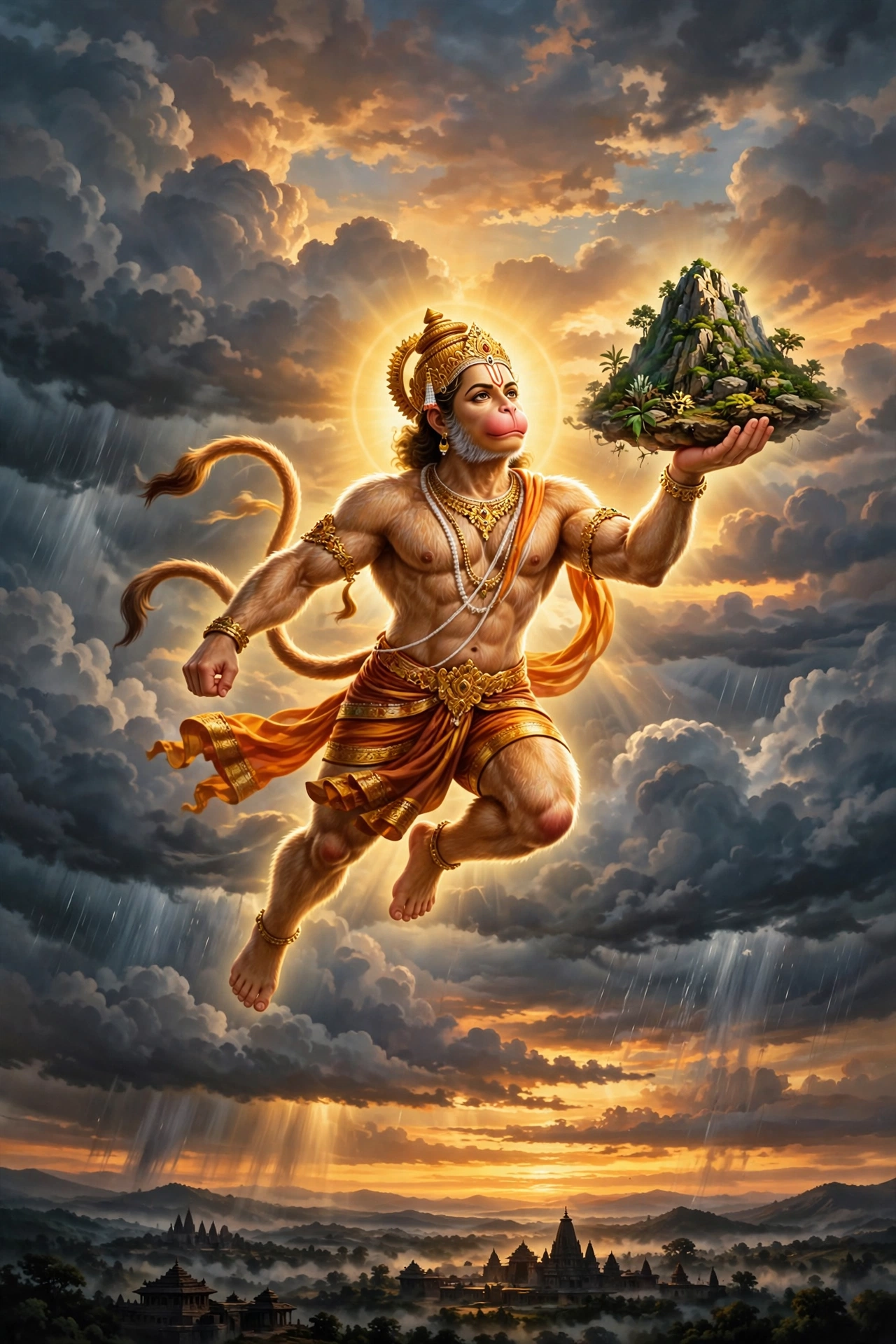
If there’s one prayer that lives in the bones of India, it’s this one. Auto-rickshaw drivers hum it in traffic. Shop owners play it every Tuesday morning before opening the shutter. Your grandmother probably knows it by heart — all of it. The Hanuman Chalisa: forty verses, seven to nine minutes, and the most recited Hindu hymn on the planet. Here’s a slower walk through it: who wrote it, what the verses actually say, and why Tuesday and Saturday matter.
Who wrote it, and what it actually is
The Chalisa was composed by Goswami Tulsidas, the 16th-century poet-saint who also wrote the Ramcharitmanas — in Awadhi, not Sanskrit, a deliberate choice that put the hymn within reach of ordinary people. The name tells you the structure: “chalisa” comes from chalis, meaning forty.
But here’s a detail most people miss. The Chalisa has 43 verses in all: two opening dohas, the 40 chaupais that form the core, and one closing doha. The opening doha begins with the poet dusting the mirror of his mind with the dust of his guru’s feet, then narrating the spotless glory of Rama — “jo dayaku phal chari” — who grants the four fruits of life: dharma, artha, kama and moksha. Tulsidas signs the work himself in the closing doha: “Tulsidas sada Hari chera” — the eternal servant of the Lord.
What the 40 verses actually say
The Chalisa opens with its most famous line: “Jai Hanuman gyan gun sagar, jai kapis tihu lok ujagar” — glory to Hanuman, the ocean of wisdom and virtue, illuminator of the three worlds. The first four verses establish who he is: Ramdoot (Rama’s messenger), Anjani Putra (son of Anjana and the wind god Pavan), and “Mahavir Vikram Bajrangi” — the mighty one with a body like a thunderbolt.
The middle verses read like a greatest-hits reel from the Ramayana. Hanuman taking a tiny form to appear before Sita and a terrifying form to burn Lanka. Crossing the ocean with Rama’s ring on his tongue. Bringing the Sanjivani mountain to revive Lakshmana. And my favourite — the sun episode: “Yug sahasra yojan par bhanu, leelyo tahi madhur phal janu” — as a child, he leapt toward the sun itself, mistaking it for a sweet fruit.
Then the tone shifts from story to promise. “Durgam kaj jagat ke jete, sugam anugrah tumhre tete” — the world’s hardest tasks become easy through your grace. “Bhoot pisaach nikat nahi aavai” — evil spirits keep their distance when the mighty one’s name is heard. This is why the Chalisa is called a Sankat Mochan stotra: Hanuman, the reliever of troubles. And the Chalisa names its own prescription: “Jo shat baar paath kar koi” — whoever recites it a hundred times finds release from bondage.
Why Tuesdays and Saturdays
Tuesday is Hanuman’s own day — the day of Mars (Mangal), and Hanuman is the great harmoniser of Mars’s fiery energy, which is why Hanuman worship sits at the centre of Mangal Dosh remedies. But Saturday belongs to Shani, and this is where the tradition gets interesting: Saturday chanting of the Chalisa is one of the most common remedies during Shani’s Sade Sati and Dhaiya periods. The popular belief is that Hanuman’s protection softens Saturn’s hard lessons — so temples fill on Saturday mornings with people who have never thought of themselves as particularly devout.
Frankly, the logic is simpler than astrology. Tuesday gives you courage for the week ahead. Saturday gives you steadiness when Shani is testing your patience. Two anchor points in the week, seven minutes each.
How to actually chant it
No special ritual is required — sincere repetition is the whole method. But the small details help:
- Timing: Morning after a bath is traditional, but evening works just as well. Many devotees chant at dawn or during Brahma Muhurat.
- Count: Start with one recitation. 3, 7 or 11 are common vows; 108 is the full measure for a sankalp.
- Pace: Focus on the meaning rather than speed. The Chalisa takes 7–9 minutes when read slowly — which is the entire point.
- Understanding: Reading the meaning alongside (even in English transliteration) deepens the chanting far more than mumbling through it. Our Chalisa collection and mantra library are good companions.
Tulsidas is said to have established the Sankat Mochan temple in Varanasi at the spot where he experienced Hanuman’s presence — tradition holds the Chalisa was born of real devotion, not literary exercise. And there’s an honest reason this hymn survived four hundred years: seven minutes of it genuinely quiets a racing mind. The Ramcharitmanas, Tulsidas’s great retelling of Rama’s story, is available in our Sanatan Shastra library for anyone who wants the full context the Chalisa draws from.
FAQs
How long does the Hanuman Chalisa take to recite?
About 7–9 minutes when read at a calm pace. The full hymn is 43 verses (2 opening dohas + 40 chaupais + 1 closing doha), written by Tulsidas in Awadhi in the 16th century.
Can I read the Chalisa on days other than Tuesday and Saturday?
Absolutely. Those two days are considered most auspicious — but daily recitation is the ideal, and no day is wrong.
Why is Saturday linked to Shani remedies?
Saturday is Shani’s day, and popular tradition holds that Hanuman’s protection softens Saturn’s hard lessons — that’s why Shani remedy lists almost always include the Chalisa on Saturdays.