 Shrimad Astro

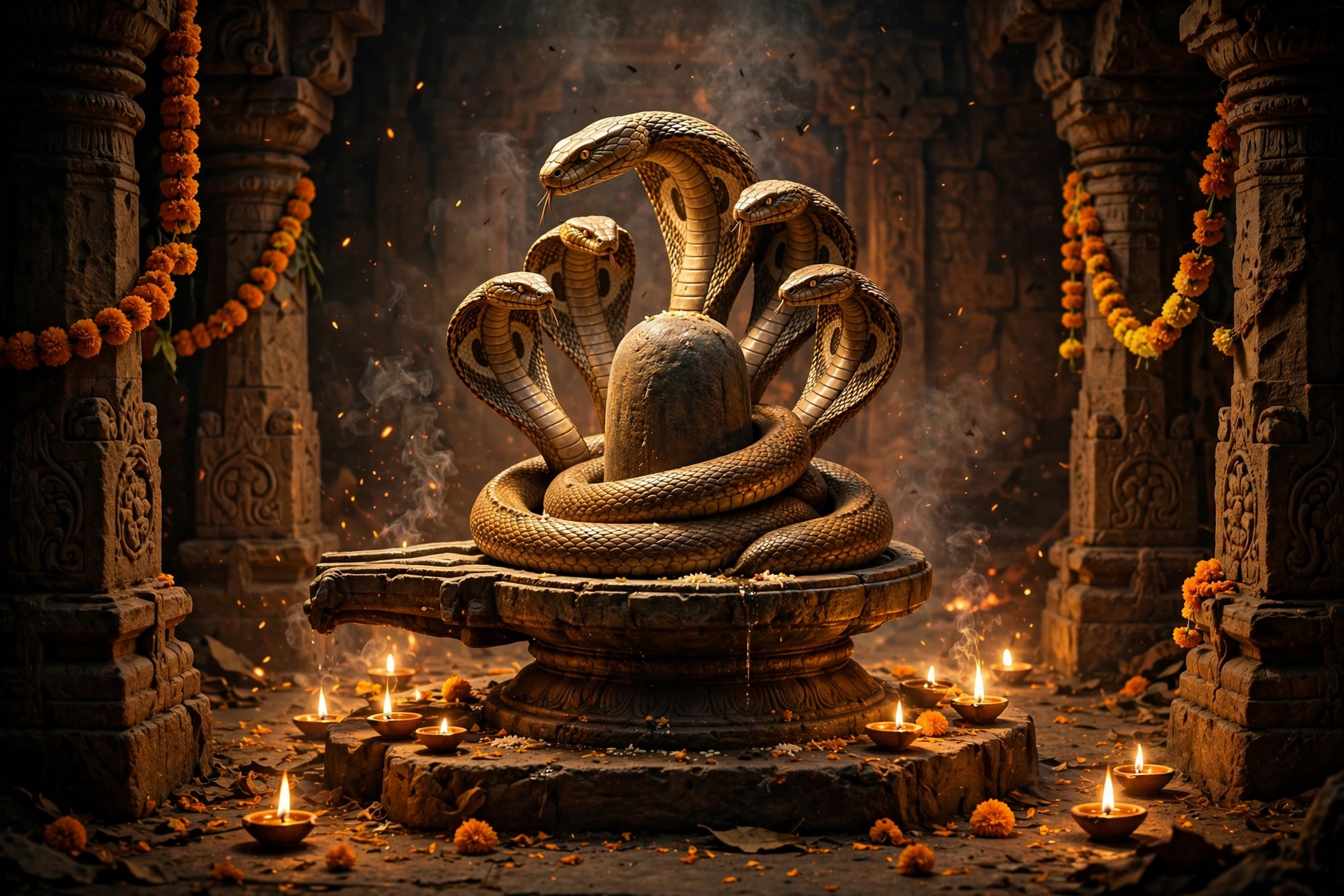
The Two Words That Frighten Every Kundli Reading
It usually happens in a crowded waiting room outside some astrologer’s chamber. You’re there about your job or your daughter’s marriage, and mid-sentence the man goes quiet, pushes his glasses down, and says the two words: Kaal Sarp Dosh. Someone starts googling expensive pujas in Nashik.
Breathe first. Then read on — because Kaal Sarp Dosh is the most misunderstood, and most misused, phrase in modern Indian astrology.
What It Actually Means
Rahu (the serpent’s head) and Ketu (the headless torso) sit exactly seven houses apart in every chart. When all seven planets — Sun, Moon, Mars, Mercury, Jupiter, Venus and Saturn — fall in the seven houses between them, leaving the other five empty, the chart looks like a serpent coiled around the planets. That’s the dosh: Kaal (time, or death) plus Sarp (serpent).
The traditional reading says life moves in fits and starts — effort that doesn’t bear fruit on time, success that arrives late, a sense of swimming against the current. But here’s the part the scary astrologers leave out: the effect is said to bite hardest only during Rahu or Ketu dasha. Outside those planetary periods, most seasoned astrologers treat it as background noise. Check whether you actually have this combination in your chart before believing a single frightening reading.
The 12 Types — Named After Serpents
Tradition classifies the dosha into 12 types, named after mythological nagas, by which house Rahu sits in: Anant (1st), Kulik (2nd), Vasuki (3rd), Shankhpal (4th), Padma (5th), Mahapadma (6th), Takshak (7th), Karkotak (8th), Shankhachud (9th), Ghatak (10th), Vishdhar (11th) and Sheshnaag (12th).
Each is read against the houses it touches — Anant to self-confidence and marriage timing, Kulik to money kept or lost, Takshak to partnerships. Treat these as themes, not fixed predictions. And if you want to know when planetary periods actually activate in a chart, see our planetary transits guide.
The Uncomfortable Truth
Honesty first: this dosha appears in none of the classical texts of Jyotish — not in Brihat Parashara Hora Shastra, not in Brihat Jataka, not in Jataka Parijata. The respected astrologer K.N. Rao wrote an entire book, Kaal Sarpa Yoga — Why Such Fright, on this. He documented dozens of highly successful people — IAS officers, industrialists, artists — who carried this very combination and thrived, and astrologers have pointed to charts of figures like Dhirubhai Ambani, Lata Mangeshkar, and Sachin Tendulkar as proof it can coexist with extraordinary achievement.
Does it mean nothing at all? Not quite. As one classical-minded astrologer put it, no single yoga can make or mar a horoscope. The real dosha in the story is the fear industry — the ones quoting you lakhs of rupees for pujas for a combination your grandparents never worried about. It’s the same scare pattern you’ll see with Mangal Dosh: one formation inflated into a doom prophecy, when only a full chart reading tells the truth.
What Genuinely Helps
If the combination is in your chart and you want to do something about it, the traditional remedies are simple, devotional, and mostly free:
- Worship Lord Shiva, especially on Mondays. A Rudrabhishek — bathing the Shivalinga with milk, water and honey — is the most prescribed remedy. Shiva wears the serpent around his neck; tradition reads this as the fear being tamed.
- Chant the Maha Mrityunjaya Mantra and Rahu-Ketu shanti mantras, traditionally 108 times a day during their dashas. Find the texts in the Navagraha stotras of our Sanatan Shastra library.
- Fast on Nag Panchami (the serpent festival of Shravan, July–August) and offer milk at a Shiva temple.
- Feed birds and animals; donate to the needy. Feeding dogs or fish, and donating black sesame or blankets, are the classic low-cost remedies.
- The big puja, if you want one: the Kaal Sarp Dosh Shanti Puja at Trimbakeshwar near Nashik or Ujjain’s Mahakaleshwar, traditionally on Amavasya or Nag Panchami. Get the price in writing — and treat anyone calling it an emergency with deep suspicion.
Rahu and Ketu also rule a daily 90-minute window — Rahu Kaal — when new ventures are traditionally avoided.
Three Questions People Always Ask
Does Kaal Sarp Dosh cancel marriage or career?
No combination alone decides that. Judge the whole chart — dasha, lagna, and the strength of the benefic planets — not one formation.
Is there a “partial” Kaal Sarp Dosh?
Most classical-minded astrologers say no: if even one planet sits outside the Rahu–Ketu axis, the strict formation doesn’t exist. “Partial dosh” is largely a modern scare phrase.
How long do the effects last?
Traditional reading ties the strongest effects to Rahu and Ketu mahadashas — 18 and 7 years respectively in the Vimshottari system. Outside those windows, the influence is generally considered mild.