 Shrimad Astro

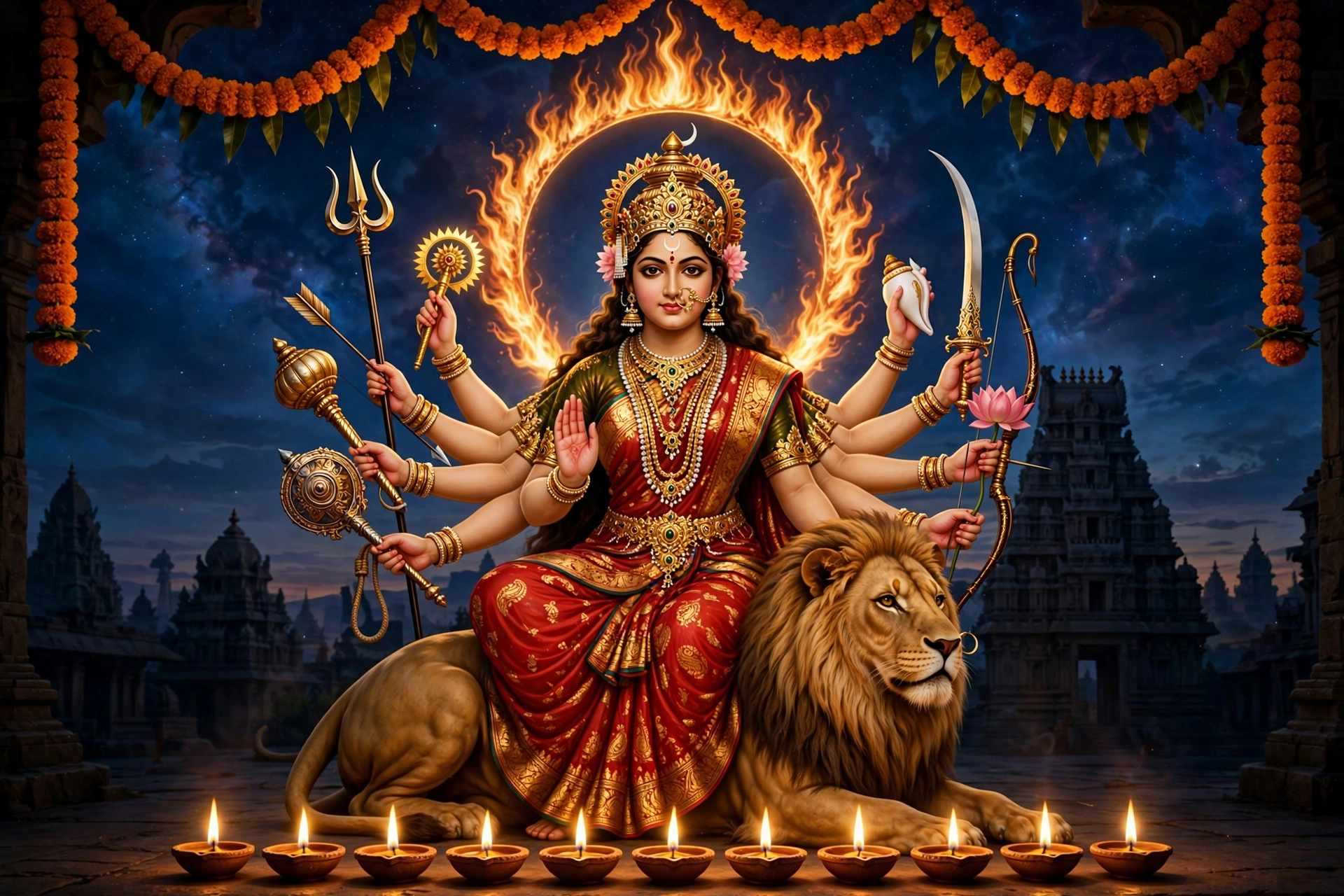
If you’ve lived in an Indian household, you know the sound: the clinking of the pooja thaali at six in the morning, your mother telling you not to touch the kalash, and someone asking who ordered the extra marigolds. Sharad Navratri is the week when the whole house quietly runs on a different clock. Here are the 2026 dates, the nine goddesses, and fasting rules that don’t require quitting your job.
The dates you actually need
Sharad Navratri 2026 starts on Sunday, October 11, the day of Ghatasthapana — when the kalash is installed and the nine nights officially begin. It runs nine nights and ends on Monday, October 19. Dussehra (Vijayadashami) falls on Tuesday, October 20.
The Ghatasthapana ritual happens on the morning of October 11. The exact muhurat shifts by city, so check drikpanchang.com or ask your family pandit for your city’s window — don’t trust a forwarded WhatsApp message.
One quirk this year: on most North Indian and pan-India panchangs, Durga Ashtami and Maha Navami both fall on October 19, because the Ashtami tithi ends early that day and Navami takes over. Bengal’s Durga Puja calendars may differ slightly, so follow your local temple if you’re in the East.
Planning something big this season? Dussehra is traditionally a siddha muhurat — a day so auspicious it needs no further calculation. Many families still get kundlis checked before fixing a date: you can match kundlis here or run a quick mangal dosh check.
The 9 goddesses, one per night
Each of the nine nights honours one form of Durga, and the order is fixed:
- Day 1 (Oct 11) — Shailputri: the daughter of the mountains, riding Nandi the bull, holding a trident and a lotus. The gentle beginning.
- Day 2 (Oct 12) — Brahmacharini: the ascetic form, walking barefoot with a rosary and water pot. Devotion, in its simplest shape.
- Day 3 (Oct 13) — Chandraghanta: the warrior with a half-moon like a bell on her forehead, riding a tiger. Courage with grace.
- Day 4 (Oct 14) — Kushmanda: the one who, tradition says, created the universe with a smile. She holds a kalash of nectar.
- Day 5 (Oct 15) — Skandamata: mother of Kartikeya (Skanda), shown with the child on her lap. The most tender of the nine.
- Day 6 (Oct 16) — Katyayani: the fierce form born to sage Katyayana — four arms, sword and lotus.
- Day 7 (Oct 17) — Kalaratri: the dark, fearsome form who destroys demons and ignorance. Fierce to look at, kind to her devotees.
- Day 8 (Oct 18) — Mahagauri: the radiant, fair form riding the bull. Calm, purity, and blessing.
- Day 9 (Oct 19) — Siddhidatri: the granter of the eight siddhis, worshipped by gods and demons alike. The one you close the nine days with.
Fasting rules, for people with jobs
The classic Navratri vrat is nine days, but let’s be honest: most working people pick a version they can actually finish. All of these are normal and respected — fast on the first and last two days only, only on Ashtami and Navami, or on alternate days. The point is devotion, not a hunger-strike medal.
If you are fasting, this is what most households follow:
- Skip: regular grains and pulses, onion, garlic, non-veg food, alcohol, and normal table salt. Use sendha namak (rock salt) instead.
- Eat: sabudana, kuttu or singhara flour, samak rice, potatoes, fruits, dairy, and makhana. Sabudana khichdi and jeera aloo are the unofficial national dishes of the season.
- How often: one main meal a day is the common practice — many families do it at noon and keep mornings light with fruit and milk.
- One rule that matters: if you’re pregnant, diabetic, on medication, or have any health condition, check with your doctor before fasting. Tradition asks for devotion, not hospital visits.
Small things that make the nine days feel real
You don’t need a temple room — a small corner works fine. On Day 1, the kalash is a clay or metal pot filled with water, ringed with mango leaves, topped with a coconut, and most families sow barley (jau) seeds around its base, watching them sprout over the nine days.
On Ashtami or Navami, many homes do Kanya Pujan — inviting young girls home and feeding them halwa-puri-chana with a small dakshina. The feeding-with-love part is the part that matters.
Don’t know which nakshatra you were born under? Pull up your free kundli — it takes a minute, and you’ll finally know whether you’re Team Ashwini or Team Rohini at family gatherings.
Quick answers
Do I have to fast all nine days? No. Fasting only on the first day, the last two days, or just Ashtami and Navami is completely standard and widely respected.
Planning your Navratri: Check the day-by-day Sharad Navratri 2026 dates calendar with tithi timings and muhurat details.