 Shrimad Astro

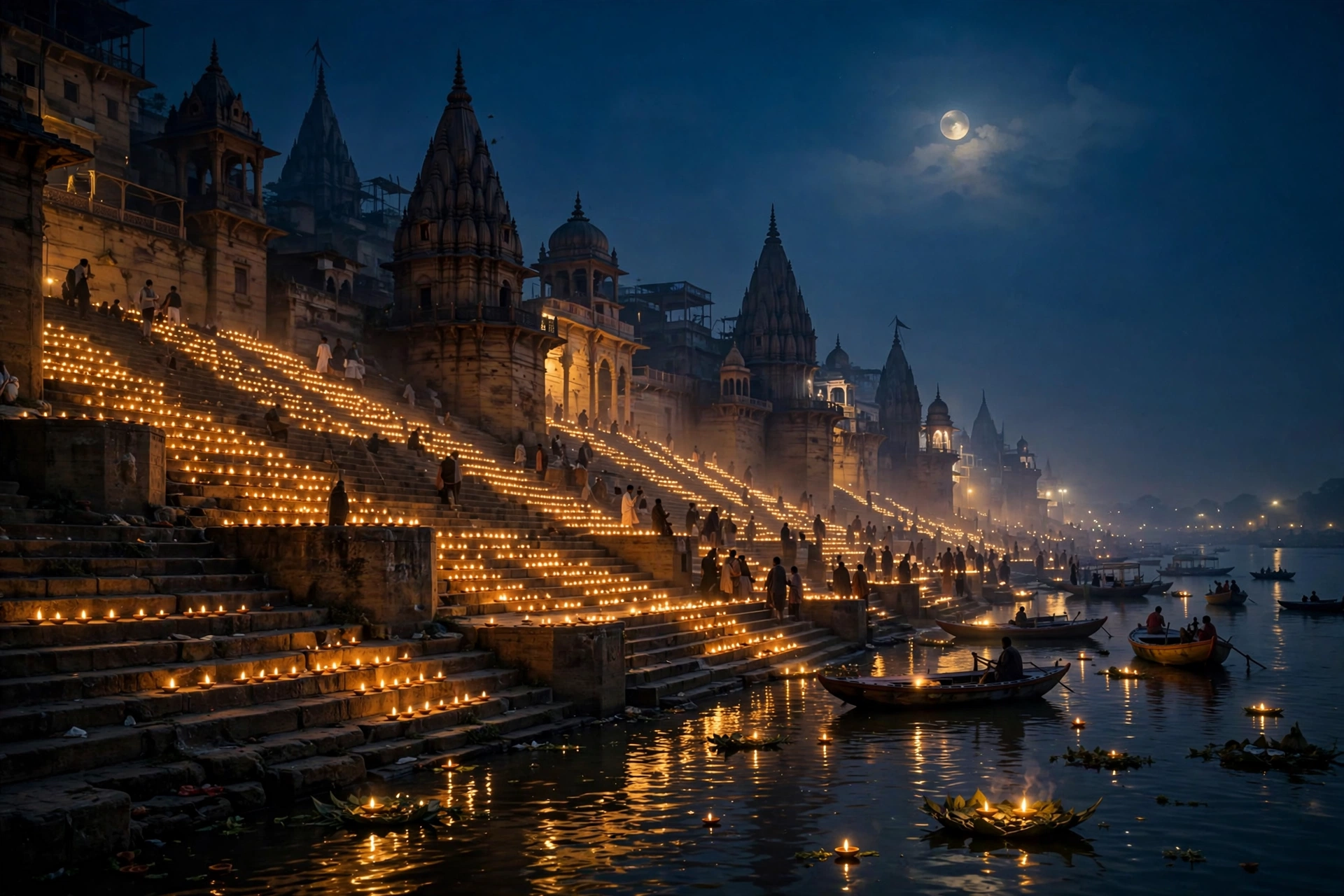
The night the gods come down to Kashi
Most of us think Diwali ends with Bhai Dooj and the leftover mithai boxes. But in Varanasi, the real show is still coming. About a fortnight after Diwali — on Tuesday, 24 November 2026 — the ghats of Kashi will be lit with lakhs of diyas for a festival most people outside UP have never heard of: Dev Diwali, the Diwali of the Gods.
The full moon of Kartik (Kartik Purnima) is when, tradition says, the gods themselves descend to earth to bathe in the Ganga. The lamps on the ghats — from Ravidas Ghat in the south all the way to Rajghat — are lit to welcome them. Diwali is our festival of lights. This one is theirs.
Shiva’s victory: why the lamps are lit
The story behind Dev Diwali is one of the oldest. The demon Tripurasura had received a powerful boon from Brahma and, with his three flying cities, had made himself nearly invincible. The three worlds were terrified, and the gods couldn’t defeat him. So they went to Shiva. On Kartik Purnima, Shiva took the form of Tripurari — destroyer of the three cities — and brought them down with a single arrow.
The gods, overwhelmed with relief, lit lamps across Kashi to celebrate. That’s why the day is also called Tripuri or Tripurari Purnima. Honestly, I find this story hits harder than most: it’s about a darkness so total that even the gods needed help, and one precise, decisive strike of clarity ending it. That’s the kind of victory a diya is supposed to symbolise.
Kartik Purnima: the holy dip and the month of lamps
The Kartik full moon is sacred far beyond Varanasi. Devotees begin the day with Kartik snan — a holy dip in the Ganga or any river at dawn — and many keep a day-long fast honouring both Shiva and Vishnu. It marks the end of the entire month of Kartik, when countless households have been lighting lamps daily at dawn and dusk.
It also closes the great Diwali arc of the year. Look at how the season stacks up: Diwali and Lakshmi Puja fall on Sunday, 8 November (see the five-day Diwali calendar and Lakshmi Puja muhurat), then comes Tulsi Vivah on Saturday, 21 November — the ritual wedding that reopens the wedding season — and then this, the grand finale on the full moon of the 24th. If you’d like to plan ahead for the next one, the site’s full moon date guide lists every Purnima of the year.
How to honour Dev Diwali at home
You don’t need to be in Varanasi to keep the spirit of this night. Here’s a simple way:
- Light diyas at dusk, facing the river or east. The lighting happens in the pradosh hours around sunset — check the exact window for your city in Choghadiya or the daily panchang rather than guessing one all-India time.
- Offer water or a small lamp to a river or a kalash if the Ganga isn’t nearby — intention counts in every tradition.
- Keep a Satyanarayan vrat if your family does them — Purnima is the classic day for it, and the Satyanarayan vrat dates are handy to have.
- Recite something for Shiva. Even a short stotra in the evening fits the day’s mood — the Sri Rudram in the Sanatan Shastra library is the great classic for this.
And if the Tulsi Vivah story intrigues you, read our piece on the sacred wedding of Tulsi and Shaligram — it’s the ceremony that sets up this whole fortnight of light. A small note for the calendar: Guru Nanak Jayanti also falls on 24 November this year, so the day is doubly blessed.
FAQs
Is Dev Diwali the same as Kartik Purnima?
Yes, essentially. Dev Diwali is how Kartik Purnima is celebrated in Varanasi — the “Diwali of the Gods” — with the famous ghats-illumination. Elsewhere in India the day is kept as Kartik Purnima with a holy dip, fasting and evening lamps.
When exactly is the full moon this year?
The Purnima tithi begins around 11:42 PM on 23 November and ends around 8:23 PM on 24 November, so the evening of the 24th is when the lamps go up. For the precise pradosh window in your city, check your local panchang.
Can I do anything special if I can’t visit Varanasi?
Absolutely. Light 5, 11 or 21 diyas at dusk, offer water toward the east, and spend a few quiet minutes with a Shiva stotra. The whole point of the festival is that light reaches everywhere — including your balcony.