 Shrimad Astro

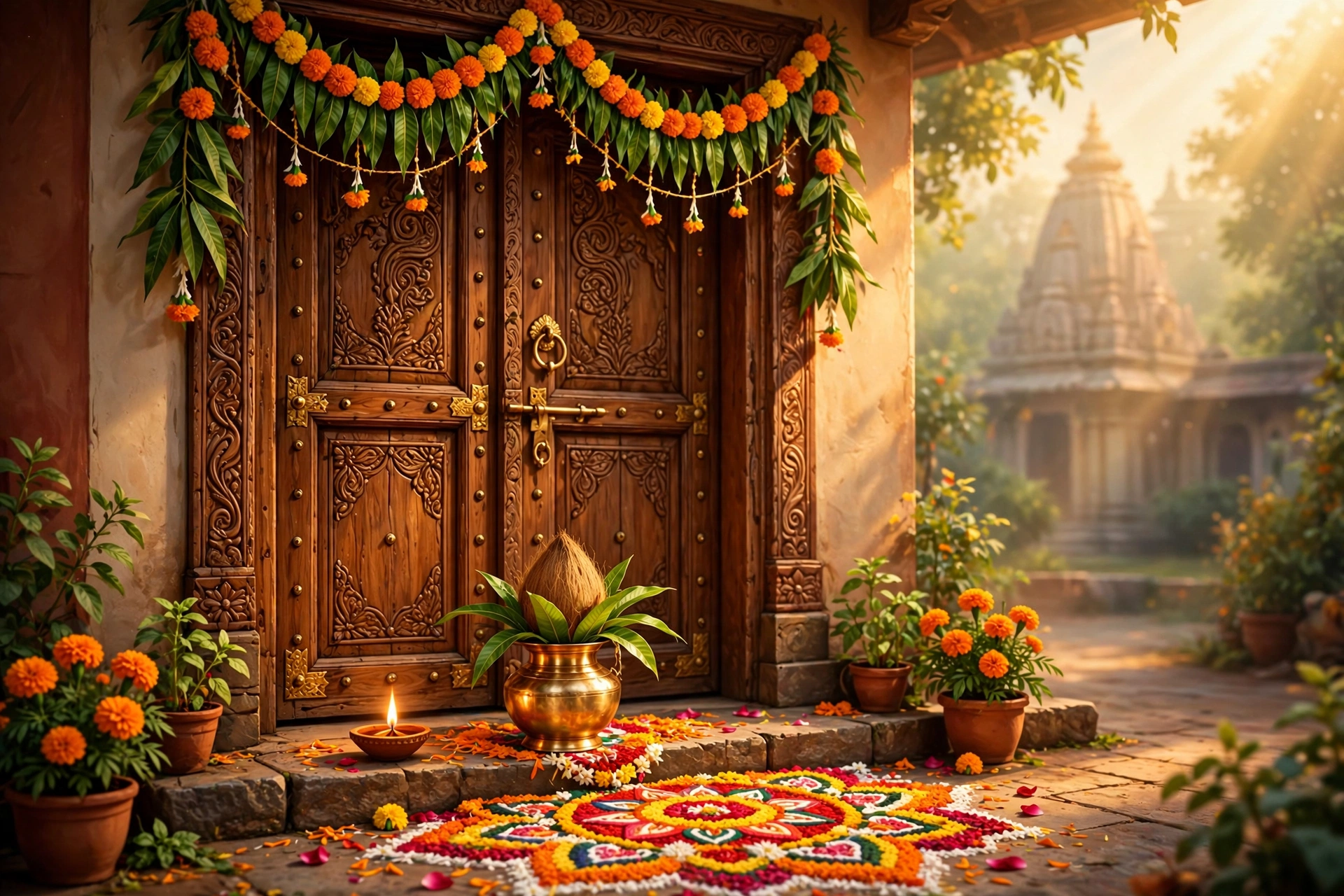
You’ve signed the papers, the boxes are packed, and the truck is booked. Before the sofa goes in and the Wi-Fi gets connected, there’s one guest your grandmother would insist on inviting first: the house itself. The griha pravesh — the first ceremonial entry — is how a family formally welcomes itself home. You don’t need a Vastu degree to get the essentials right; a handful of placement principles covers nearly everything most families actually do.
The Main Door: the Mouth of the House
In Vastu the main door is the mukhya dwar — the mouth of the house, where energy, opportunity, and guests walk in. The verdict is near-unanimous: a door facing east, north, or northeast is the gold standard — east catches the first morning light, north is traditionally linked with wealth. West is acceptable; south and southwest need the door’s exact position checked by an expert. Still choosing a plot? Check the auspicious house direction by your rashi before committing.
Whatever the direction: the main door should be the largest in the house, opening inward and clockwise, never facing a staircase or a dark corner. Keep it clean, well-lit, and freshly decorated. A dark, creaky, cluttered entrance is bad Vastu — and bad hospitality. Full doctrine: our complete Vastu Shastra guide.
Kitchen, Puja Room and Bedrooms: The Big Three
Three rooms, three rules: kitchen southeast, puja northeast, master bedroom southwest. The kitchen sits in the southeast because that corner belongs to Agni, the element of fire — fire where fire belongs. If the plan won’t allow it, the northwest is the accepted second choice; the one corner to keep the stove away from is the sacred northeast.
The puja room belongs in the northeast — the Ishan corner — with the deities facing east. If the northeast isn’t free, east or north work. And the master bedroom goes to the southwest, the heaviest and most grounded corner; park the wardrobes and the big bed there too. Children’s rooms and the living room sit comfortably in the north, east, or northwest.
The Northeast–Southwest See-Saw
If one principle explains most Vastu complaints, it’s this: the northeast should be light, open, and low; the southwest should be heavy, high, and closed. Keep the northeast corner clean — no toilets, no shoe racks, no heavy storage — and let the southwest take the wardrobes and the bulk. The centre of the home, the Brahmasthan, stays uncluttered, and the plot ideally slopes gently down toward the northeast.
The reassuring part: none of this demands renovation. Shifting the shoe rack away from the northeast wall and the heavy wardrobe to the southwest wall is an afternoon’s work with a patient spouse.
Picking a Griha Pravesh Muhurat
A good home deserves a good beginning, and the muhurat — the exact window of first entry — is where most families spend their pandit-budget. The rules are consistent across panchang sources: pick a day in the bright half of the month (Shukla Paksha); Wednesday, Thursday, and Friday are the classics, Monday works too. Avoid Tuesdays and Saturdays, steer clear of Amavasya and the rikta tithis (the 4th, 9th, and 14th lunar days), and never enter during Rahu Kaal.
The favourable nakshatras include Rohini, Mrigashira, Pushya, Chitra, Anuradha, and Revati — stars ruled by benevolent deities, linked with growth and stability. The four Chaturmas months (roughly July to November) are traditionally skipped, so most families plan entries between late autumn and early summer. For exact city-wise dates, our Griha Pravesh muhurat dates page keeps the current month’s windows — and if you’re still at the buying stage, check the property purchase muhurat too.
The First-Entry Ritual, Simply
The ceremony is gentler than most people fear. The pandit does Ganesh puja, a Navagraha puja — the hymns live in the Navagraha Suktam in our Sanatan Shastra library — and a small havan. Then the lady of the house traditionally enters first — right foot over the threshold — carrying a kalash, a copper pot of water crowned with mango leaves and a coconut. Inside, milk goes on the new stove and is allowed to boil over: spilling milk means overflowing abundance. A rangoli at the door, mango-leaf torans above it, a diya in the puja corner. That’s the whole magic — the house gets a formal hello.
Quick Answers
Can we shift furniture in before the griha pravesh? Traditionally, no — the gas cylinder aside, the house stands empty until the first ceremonial entry. The truck waits until the kalash goes in.
Our main door faces south. Are we doomed? No. Direction alone doesn’t make or break a house — the precise position of the door within the wall and the right remedies matter far more. Get a consultant to check the door’s pada before you lose sleep.
We’re moving into a rental. Does any of this matter? Lightly. Most families in rentals skip the full muhurat machinery and do a simple puja with the milk-boiling ritual. The complete rulebook is for homes you own — rented walls get a blessing, not a blueprint.